

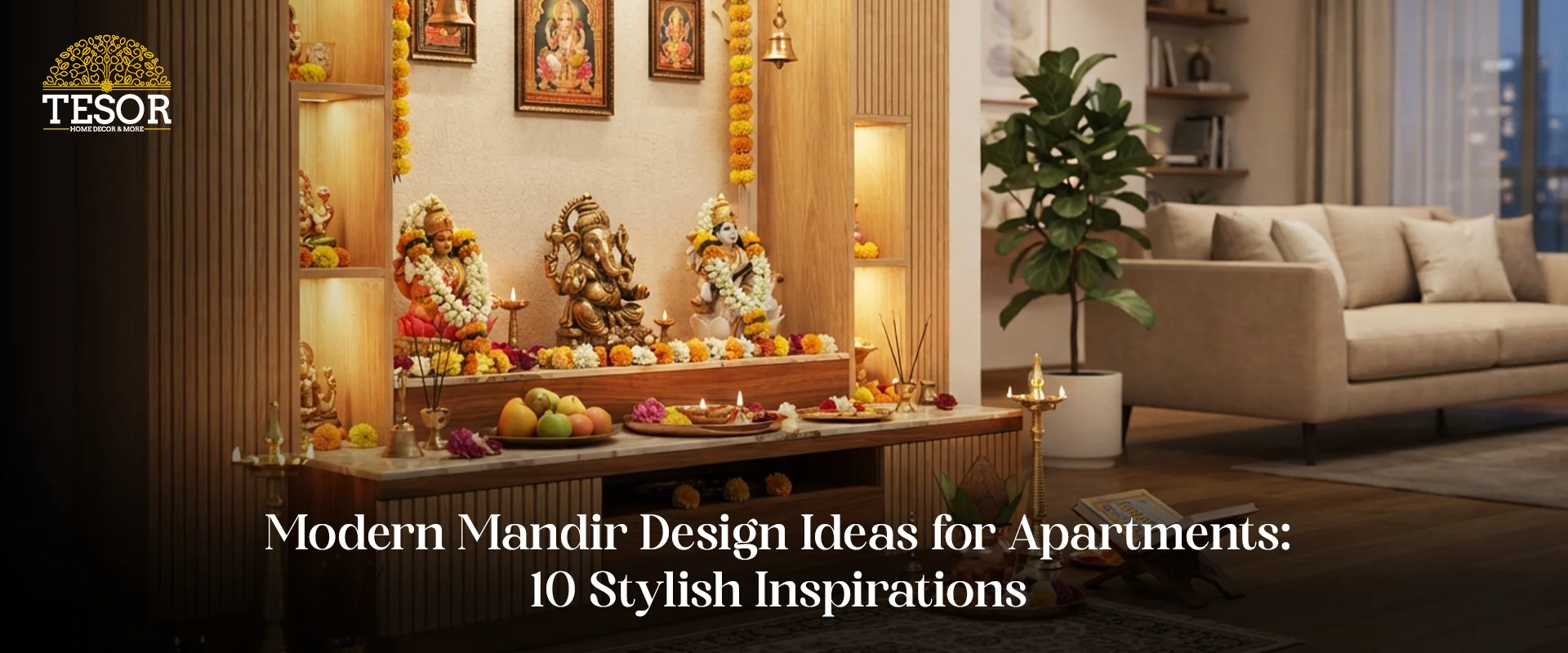
Modern Mandir Design Ideas for Apartments: 10 Stylish Inspirations
Creating a dedicated pooja space in an apartment does not require a large room or elaborate setup. With thoughtful planning, even a compact corner, wall niche, or unused section of the living room can become a peaceful and beautiful place for prayer.
Today, Modern Mandir Design for Apartments combines traditional elements with contemporary materials, clean lines, smart storage, and space-saving layouts. From warm wooden panels to minimalist wall-mounted units, there are plenty of ways to create a temple that complements your home’s interiors.
If you are looking for inspiration, here are 10 stylish ideas to consider.
Why Choose a Modern Mandir Design for an Apartment?
Apartments often come with limited floor space, making a separate pooja room difficult to accommodate. A modern mandir can solve this challenge by fitting naturally into the existing layout.
The right design can:
- Make efficient use of limited space
- Complement contemporary home interiors
- Provide dedicated storage for pooja essentials
- Create a visually calm corner
- Combine traditional aesthetics with modern functionality
The key is to choose a design that feels special without making the space look crowded.
10 Modern Mandir Design Ideas for Apartments
1. Wooden Mandir with Decorative Jaali Panels
Wood is one of the most versatile materials for a home temple. A compact wooden structure with intricately patterned jaali panels can create a traditional feel while maintaining a contemporary appearance.
Use warm wood tones with subtle lighting to make the mandir stand out. A jaali panel can also act as a visual partition without completely closing off the space.
This works particularly well in living rooms and entrance areas where you want the mandir to become an elegant focal point.
2. Floating Wall-Mounted Mandir
If floor space is limited, a wall-mounted temple can be one of the most practical Mandir Design Ideas for Flats.
A floating unit can include a small platform for idols, a decorative back panel, and one or two drawers underneath for storing incense, lamps, prayer books, and other essentials.
Because it does not occupy much floor area, this style is particularly suitable for compact apartments.
3. Backlit Mandir with a Feature Wall
Lighting can completely change the appearance of a small temple. Consider creating a feature wall behind the idols and adding warm LED backlighting around the panel.
Wooden textures, marble-look surfaces, fluted panels, or subtle patterns can be used for the backdrop.
Keep the lighting warm and understated rather than excessively bright. The aim is to create a calm atmosphere while highlighting the mandir.
4. Glass-Enclosed Modern Temple
For homeowners who want a dedicated pooja space without building a separate room, a glass enclosure can be an elegant solution.
A wooden frame combined with clear or textured glass creates a defined temple area while allowing light to pass through. It also helps visually separate the pooja space from the rest of the room.
This design works well when the mandir is positioned within a living room, dining area, or larger passage.
5. Mandir Integrated into a Living Room Unit
One of the smartest Modern Mandir Designs for apartments is to incorporate the temple into existing furniture.
For example, a mandir can be designed as part of a larger storage or display unit. A dedicated niche can hold the idols, while closed cabinets below or beside it provide storage.
This approach is useful when you want the mandir to feel like an intentional part of the interior rather than an addition to an already furnished room.
6. Compact Corner Mandir
Unused corners can become surprisingly effective prayer spaces.
A corner temple can use two adjoining walls, with a compact platform, vertical backdrop, and overhead decorative element. This design minimizes the footprint while still giving the mandir a clearly defined identity.
For smaller flats, this can be a better option than trying to fit a large freestanding temple into the room.
7. Marble and Wood Combination
For a more luxurious look, combine the warmth of wood with the clean appearance of marble or a marble-inspired surface.
A wooden frame with a light-coloured backdrop can create a sophisticated contrast. Add warm lighting and minimal decorative elements to maintain a refined appearance.
This combination works especially well in contemporary interiors where natural textures and neutral colours are already part of the design.
8. Mandir with Smart Storage
A beautiful temple should also be practical. Storage can be incorporated into the base or surrounding structure to keep everyday pooja items organized.
Drawers can hold incense sticks, cotton wicks, prayer accessories, and other small items, while closed cabinets can store less frequently used articles.
For apartments, multifunctional design is particularly valuable because it keeps the temple area neat without requiring additional furniture.
9. Minimalist Niche Temple
Not every temple needs an elaborate structure. A simple wall niche with a clean backdrop, a small platform, and carefully placed lighting can create a peaceful prayer space.
This is ideal for homeowners who prefer minimalist interiors.
Use a restrained colour palette and avoid overcrowding the niche with decorative elements. A few meaningful details can often create more visual impact than excessive ornamentation.
10. Partition-Style Mandir
A temple can also double as a stylish partition between two areas.
A wooden or decorative panel can define the mandir while subtly separating spaces such as the living room and dining area. Jaali, slatted wood, or patterned panels can provide privacy without making the room feel enclosed.
This is one of the most flexible Home Temple Design Ideas for open-plan apartments.
How to Choose the Right Mandir Design for Your Apartment
Before finalizing your design, consider the available space and the overall interior style of your home.
Measure the area: A temple should fit comfortably without obstructing movement.
Consider the wall: Check the wall’s condition and structure before installing a wall-mounted unit.
Plan storage: Decide where pooja essentials will be kept so that the temple remains uncluttered.
Coordinate with interiors: Wood, glass, marble, laminates, and decorative panels can all be selected to complement your existing furniture.
Think about lighting: Warm, focused lighting can enhance the space without overwhelming it.
Keep maintenance in mind: Choose finishes that are easy to clean, particularly around areas where oil lamps or incense are regularly used.
Materials and Finishes for Modern Mandir Designs
Material selection can determine both the appearance and longevity of your temple.
Wooden finishes offer warmth and versatility, while glass can make compact spaces feel more open. Marble and stone-inspired surfaces create a more traditional or luxurious appearance. Decorative panels and jaali can add detail without requiring excessive ornamentation.
For a modern apartment, combining two or three complementary materials is usually enough. Too many finishes can make a small mandir look visually busy.
What About Vastu for an Apartment Mandir?
Many homeowners consider Vastu while planning their pooja space. Traditionally, direction, placement, cleanliness, and orientation are considered important.
However, apartments can have structural limitations, so the design should balance these preferences with practical realities. Avoid forcing a temple into an unsuitable location simply to follow a design rule. Good ventilation, safe placement of lamps, convenient access, and a clean environment should also be priorities.
Final Thoughts
A well-designed temple can become one of the most meaningful corners of an apartment. The best Modern Mandir Design for Apartments does not necessarily need to be large or elaborate. It should make intelligent use of available space while creating a peaceful connection between traditional rituals and contemporary interiors.
Whether you prefer a wooden jaali temple, a floating wall unit, a glass enclosure, or a minimalist niche, the right design can blend naturally with your home while giving your prayer space its own identity.
FAQs
What is the best mandir design for a small flat?
A wall-mounted, corner, or minimalist niche temple is usually suitable for a small flat because these designs use limited floor space.
Which material is best for a modern home mandir?
Wood is a popular choice because it offers warmth and works well with both traditional and contemporary interiors. It can also be combined with glass, marble, or decorative panels.
Can a mandir be part of the living room?
Yes. A mandir can be integrated into a living room unit, placed within a niche, or separated using a decorative partition.
How can I make a small mandir look more spacious?
Use light colours, minimal decoration, floating designs, glass elements, and warm integrated lighting to create a visually open appearance.
How much space is needed for a home mandir?
There is no fixed size. A compact wall-mounted or niche design can work in a very small area, provided the idols and essential pooja items can be accommodated comfortably.